Client Spotlight
'Prepare, Prepare, Prepare'
Q&A with Dora O'Donoghue, Structured Finance at RWE
From a $4 billion offshore wind project to strategic tax credit planning, Dora O'Donoghue shares what it takes to get complex deals done — and what she wishes more buyers understood before they picked up the phone.
Published in Footnote Issue 1 · July 2026 pp. 16-17
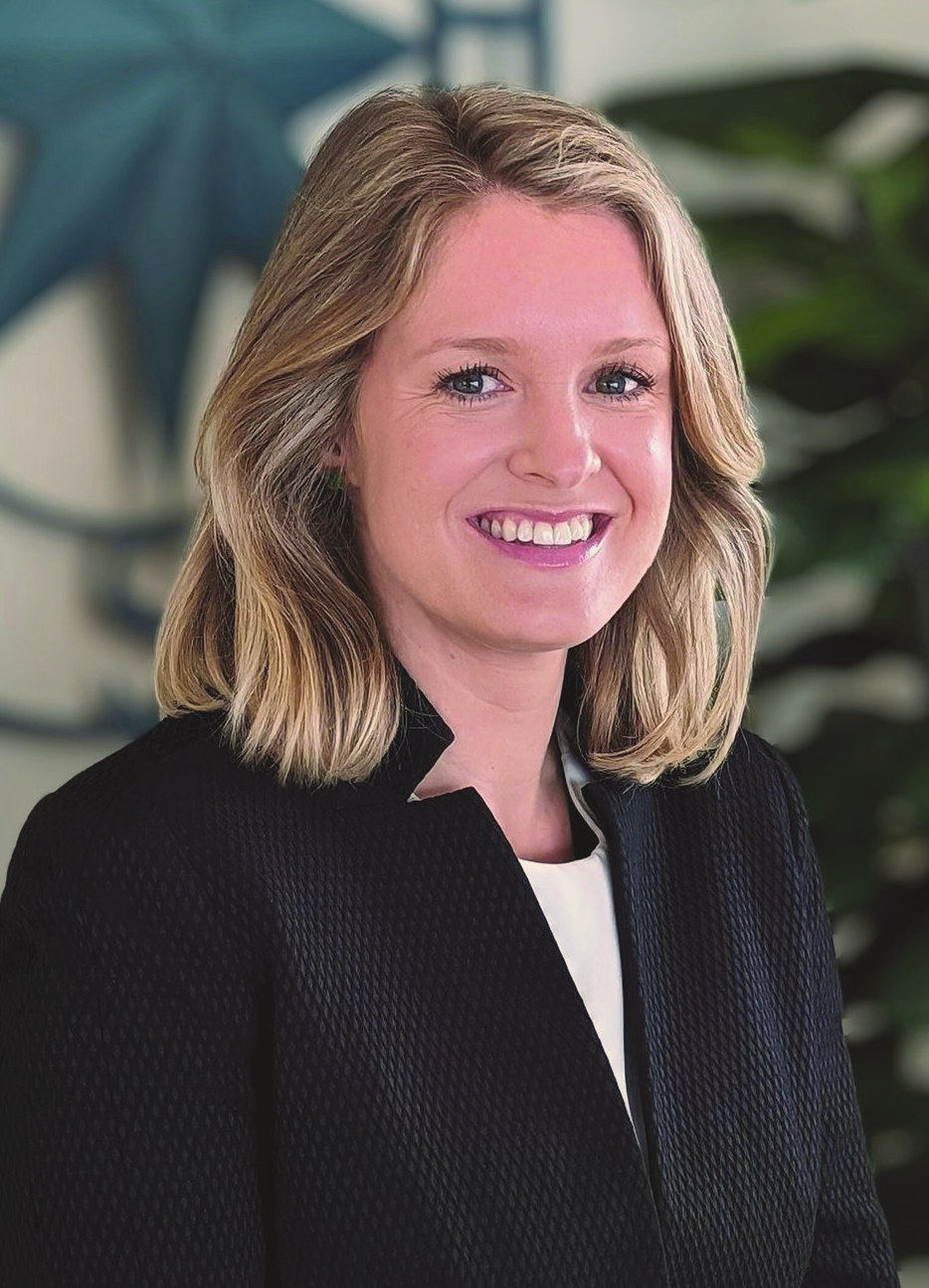
Dora O'Donoghue works in structured finance at RWE, one of the world's largest independent power providers, with a US presence spanning two decades and 27 states. Originally from Ireland, she moved to the US several years ago after working across European and North American markets. Since the advent of the tax credit transfer market, she and her team have been rethinking how RWE finances its projects — and what that means for the broader clean energy market.
Q:Tell us about your career journey. What drew you into clean energy finance?
A:I started in corporate finance and M&A. In university, I actually studied ecology. So when the opportunity came up to work for an integrated energy company with a substantial renewables portfolio, it was quite an exciting opportunity to put ecology, law, and a master's in corporate finance all together. The other thing that drew me to the clean energy space was how large the actual projects were and what a real-world impact you were actually having.
What's kept me in the industry long-term — over a decade — has been the fact that it's constantly evolving. You're seeing a range of transactions across markets, and technologies are advancing where something may have been much more niche ten or fifteen years ago. You're really seeing them come up to a scale now that is quite interesting because it's also changing the capital market structure overall. And that led me into working more in structured finance of late, which is quite an exciting time to actually join it, given what's happening in the tax credit environment.
Q:What's kept you motivated in particular lately?
A:Just watching the market evolve, especially with energy tax credits. In 2022, the market was about $20 billion for tax credits. And now you're seeing $50 and $60 billion, and that has largely been driven by the renewables transfer market. We are only seeing a portion of the Fortune 500 buying tax credits, which just shows you where the market could get to. So the challenge is to bring some of those people into the market, to educate them as to how they could optimize their tax positions — and in doing so, help reinforce the infrastructure market in terms of renewables.
Q:You moved to the US from Ireland. What brought you here, and what's kept you?
A:I originally worked for a Canadian asset manager, and so I had a lot of experience from working with them in the US markets. The previous company I worked for was looking to expand into the US market at the time. And because I had the US experience, I decided, this is a great opportunity.
What's kept me is, again, the challenges you see in the market. The US market is far more complex because of the nature of the tax equity structures and the hybrid structures. That complexity is genuinely interesting to navigate.
Q:You've worked in both European and US renewable energy markets. How would you characterize the differences?
A:Tax credits are an essential part of the capital stack for US projects once you monetize them via tax equity financing or tax credit transfers. In Europe, you don't have that type of structure at all. You have what would be the equivalent of a PPA, or a CFD, and some sort of feed-in tariff — and that's what underpins the financing world there. You don't get the short-term financing, construction financing, back-leverage deals that you do here. You get long-term debt that goes in for 15 to 20 years on whatever your PPA is, plus maybe a tail of two years or a nose of two years. You don't have the bifurcation of a private placement market versus back leverage versus tax equity — it's a much more simplistic capital structure.
I would say they're probably missing an opportunity to make projects even more economical using tax credits. It's definitely been one of the major tools in terms of incentivizing private investment in these infrastructure projects. The US Federal Government has fewer tools to encourage renewable energy generation due to regulatory fragmentation. But the federal government can incentivize it via tax credits, which has served to broaden the capital markets in a different way — it's not just bank partners anymore. It's an innovative way to look at the market. You bring corporates into the actual capital structure, which brings more liquidity, rather than it just being tax equity investors. And it allows these companies to make it a bit more efficient for themselves on their tax structures as well.
Q:What advice do you have for companies looking to sell tax credits?
A:Prepare, prepare, prepare. You should have deal execution certainty. You should prepare your data room — you want your diligence materials all prepared. And then have an assessment of yourself as to what your risk allocation is: where do you ultimately want your indemnities and PCGs or tax insurance to land, what exposure are you going to have. Have strong documentation behind the different projects. Have an idea of what your term sheet might look like, your TCTA, so that you go out to a potential buyer who actually then understands what your position is and what you're really selling — rather than learning as you're going along. You just need to be really well prepared when you go out to market with your projects.
Q:Is there anything you wish tax credit buyers knew — that would make the process smoother on your end?
A:I think for them, it would be good if they had certainty on their tax capacity. We've sometimes been a little bit down the road with some buyers and unfortunately it's kind of stopped the transaction because they've realized they don't have tax capacity. It's the buyers who just don't properly do their due diligence as to what their tax capacity would be. Or maybe they contract too early in the year before they have deal certainty on their side.
Q:Tax credit transfers began in earnest in 2024. How have they changed the way RWE finances projects?
A:Transferability has brought fundamental changes. RWE has been in the US market for nearly two decades and has grown to become a leading power provider with operations across 27 states. We've built a lot of projects, and we've mainly always had tax equity on all of our projects — tax equity partnerships. And since 2024, you've seen that change. We're now fundamentally building transfers into our investment decisions.
And so that actually allows us to optimize the projects earlier on when we take FID [final investment decision] assumptions and FID on projects. We can now actually possibly support cheaper PPAs [power purchase agreements] — so it's less of a cost for consumers. It's built into how we make our supply chain stack up. It's really added a lot more value to the projects. It does come with some complexity, but by doing transfers, there is less diligence — they're lighter, they're less complex. So sometimes when we might have a smaller-scale project, we might not actually do tax equity on it at all. We might just do a pure transfer, because it's shorter transaction timelines. It allows us to be much more efficient in the build profile and take less risk on it.
Q:Tell us about one of the larger financings you worked on — the $4 billion offshore wind deal.
A:I worked on raising financing for a large offshore wind farm — about $4 billion in debt at the time, which tapped about 23 banks. And it was the largest financing done globally at the time. So it was quite interesting trying to get everybody together, and in a technology that was still coming about at the time as well — proving a concept of a turbine at a scale that had never been built before. Watching people do diligence and trying to bring the market along with you as everything is evolving was quite a challenging thing.
You're dealing with a lot of different cultures and personalities, because when you're bringing banks together from different areas of the world, you're also dealing with different IC committees. So you're really learning how to navigate different personalities, different people, and what their challenges actually might be — and how you could help them get this to the line.
Q:What does life look like outside of RWE?
A:I have a five-month-old and a fifteen-month-old — and they're only ten and a half months apart, which is what makes it really crazy. I also enjoy tennis. I enjoy travel when we get to do it. Right now, most of the focus is probably on family, which is quite nice because it's a different pace and different challenges than structured finance. You do get to recharge in a different way — especially watching kids grow up and have the fun parts of watching the world and their imagination switch on. And then tennis helps me decompress from any stresses at work, definitely.